
NEW
Infinite Scale
Secure Teamwork
Made Easy
Enterprise File Storage and Collaboration


Seamless Teamwork
With Spaces, your team’s files remain accessible, regardless of personnel changes.

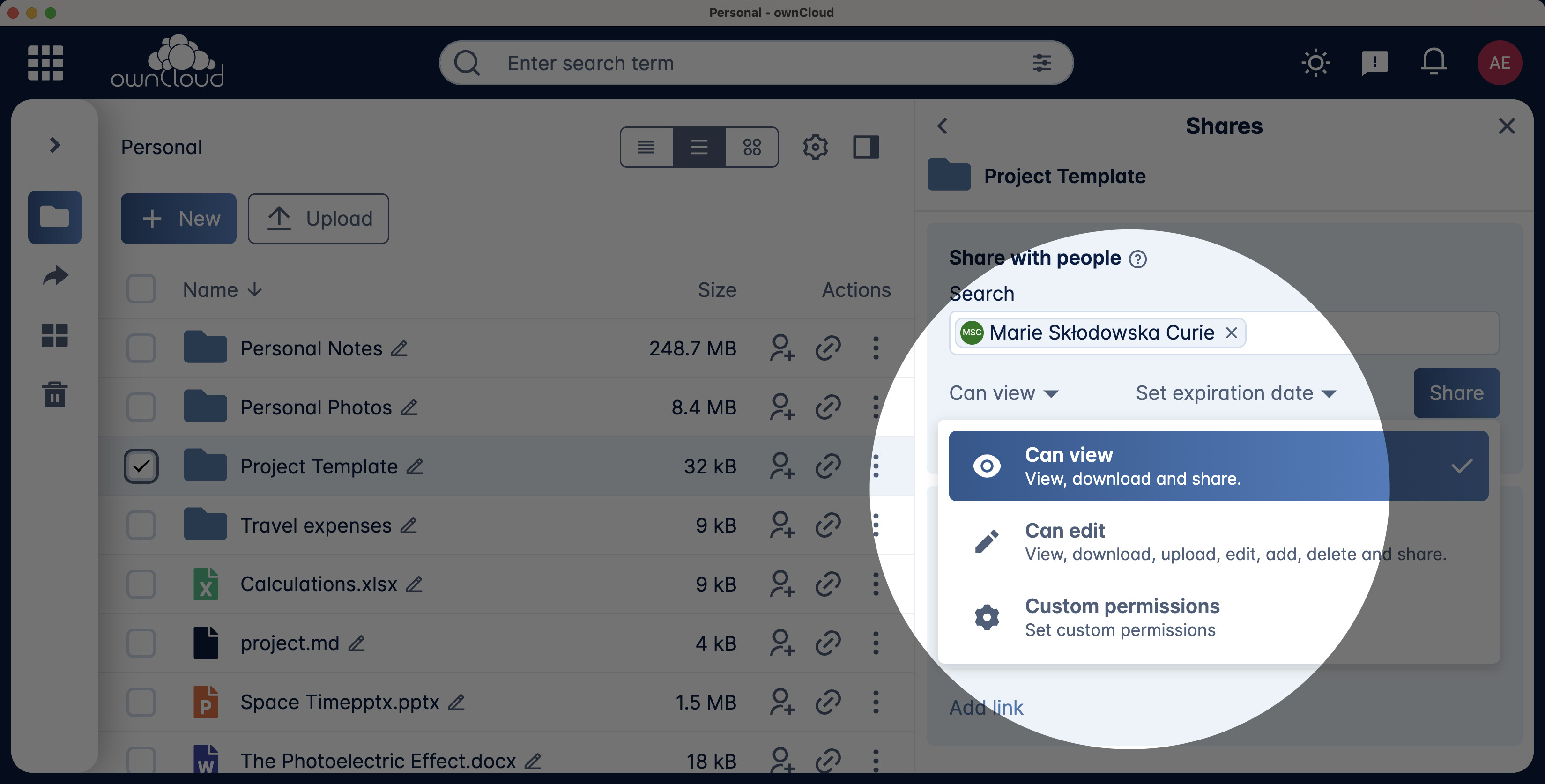
100% Control for Privacy and Security
Take control of your data. Whether it’s on-premises, in a chosen data center, or a hybrid setup, ownCloud empowers you to control where your data resides. With multi-factor authentication, encryption, and complete data ownership, achieve compliance with regulations and certifications, ensuring the highest security standards for your organization.
Ready To Go Compliance
Designed for organizations with guaranteed compliance to GDPR and WCAG/BITV standards.


Find and Organize with Ease
Streamline file organization and discovery with with the help of tags, full text searches, and pre-formatted folder structures, redefining the ease and efficiency with which you locate and oversee your business files.
Web Office
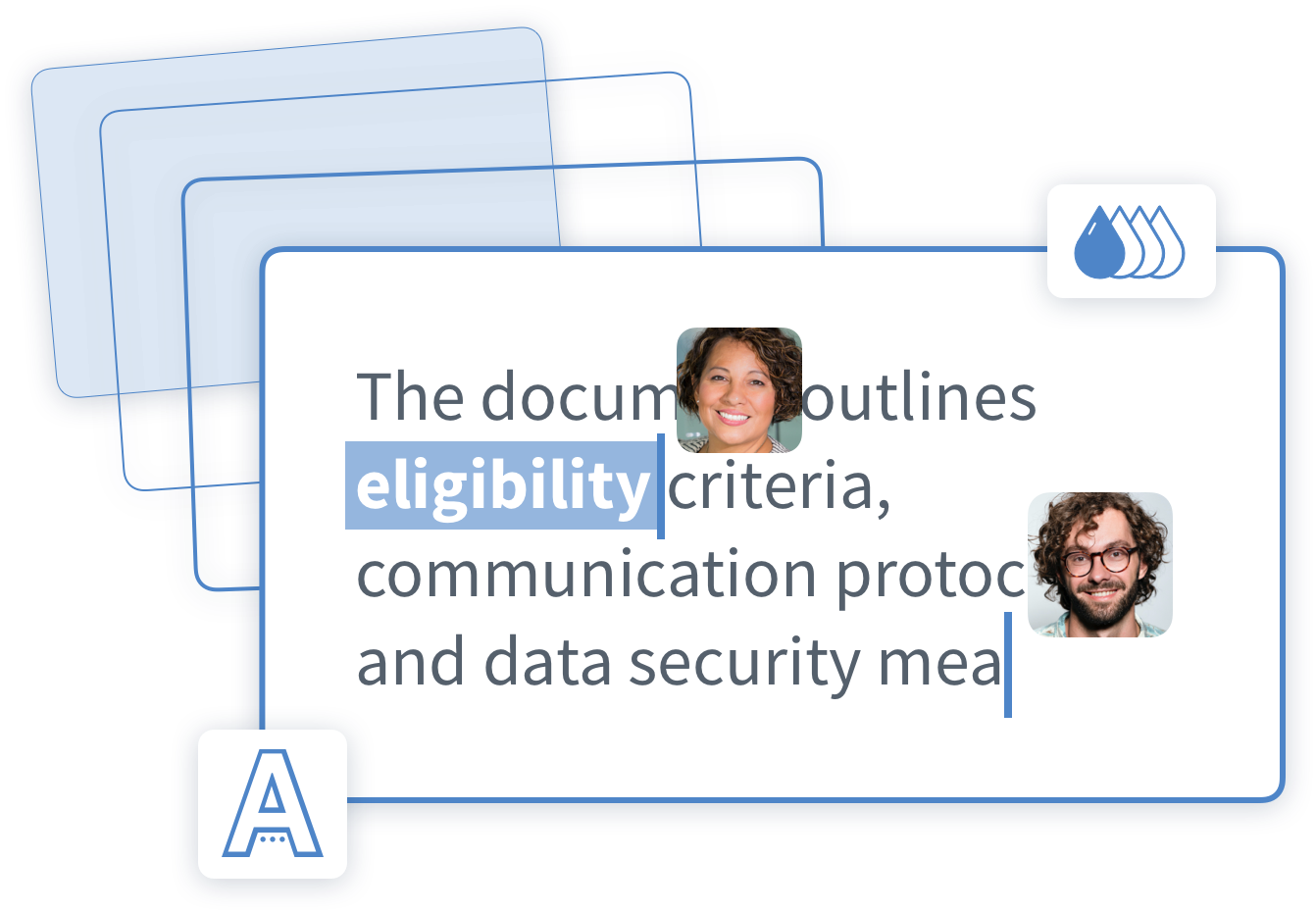
Elevate collaboration with the Web Office of your choice, empowering teams to work together in real-time directly in the browser, from anywhere – because great ideas shouldn’t have to wait.

Cloud Native Architecture
ownCloud Infinite Scale empowers organizations to build and scale applications in dynamic environments, including public, private, and hybrid clouds. With support for containers, microservices, and declarative APIs, it enables seamless integration and efficient resource management.
Suite of Features to Help You Achieve More

File Firewall

Spaces

Custom User Roles

Full Text Search

Secret File Drop Folders

GDPR Export

Tags

Administration Settings
Technical Aspects

Cloud Native Architecture

Data Ownership

Control and Compliance

Microservice
Increase Efficiency, Optimize Usability and Reduce Cost
As the name suggests, Infinite Scale elevates flexibility in classical or federated network setups to new levels, allowing infinite scalability, integrating data fabrics, networks and clouds of all sizes.
The new cloud-native approach with Go, Microservices and a new vue.js web interface helps reduce cost for both deployment and maintenance, and at the same time, allows the integration of all kinds of data sources of any size and distribution.
Infinite Scale empowers users to share data and collaboration in new and visionary ways, and at the same time, enjoy full control over links and files shared, in on-premises, hybrid or public cloud scenarios.
Focus on Users and Metadata
With Infinite Scale, the consumer takes over the central role. As a cloud-native platform, its modern architecture serves this new data consumption model by providing Data Management as a Service (DMaaS) with a unified access to data through APIs across all data silos, with multiple, individual storage backends if needed.
Infinite Scale is designed to connect these storage backends and provide a unified data access layer on top of the storage. This allows to consolidate any existing data (silos) sources, thus securing previous investments into data repositories.

Download the Factsheet on
Infinite Scale
Latest News on Infinite Scale
What’s New in ownCloud Web: A Summer of AI Extensions (and Two Admin Tools Worth Knowing About)
Eleven new oCIS Web extensions shipped this summer — AI summarizers, taggers, and a sensitive-data scanner, plus two long-requested admin tools. All AI features run through an operator-controlled proxy, so your LLM endpoint, your rules.
ownCloud Mobile Roundup: Android Closes an App-Lock Bypass, iOS Fixes File Provider and Drive ID Issues
Two ownCloud mobile patches out this week: 🔒 Android 4.8.4 closes an app-lock bypass (back gesture could skip the passcode/biometric prompt) 📱 iOS 12.7.1 fixes File Provider copy bugs + Drive ID compatibility for non-standard oCIS spaces
ownCloud Infinite Scale 8.0.8: Share Metadata Corruption Fix and Two Security Updates
oCIS 8.0.8: fixes a share-metadata corruption bug under concurrent writes, patches a WebP decoding DoS issue + a Go stdlib CVE, caches LDAP lookups, adds optional NATS TLS. Patch release, no config changes needed.